
Seattle Collaborative Divorce Lawyer
Collaborative Divorce: A Different Way To Do A Washington Divorce
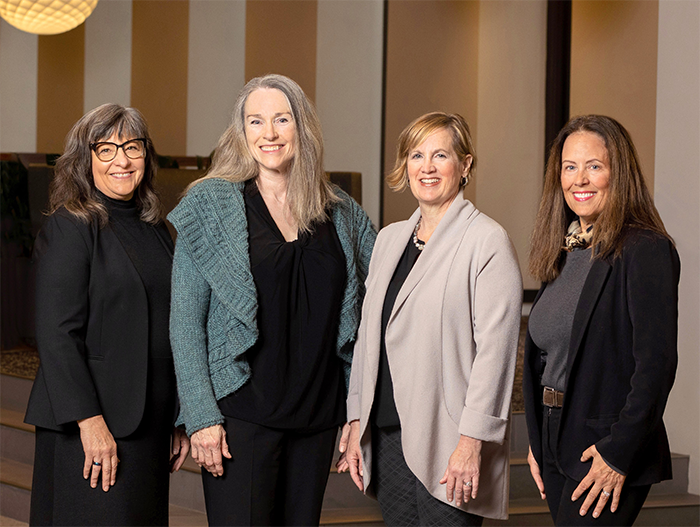
Meridian Family Law offers Collaborative divorce as an alternative to litigation. When divorcing couples are looking for a client-focused, out-of-court and team-supported divorce process that allows them to explore creative solutions that may not be available in a traditional litigated divorce, a Collaborative divorce can be a wonderful alternative.
Our Collaborative divorce attorneys are passionate about this area of law because it guides couples through a respectful, problem-solving process that centers on their unique situations, interests and goals. Several of our lawyers have undergone specialized training in the Collaborative process and represent clients in Collaborative divorce.
A Collaborative divorce does not mean a conflict or stress-free divorce, but it is a unique process where a team of Collaboratively trained professionals provides support to the parties as they work toward a win-win resolution using transparent communication, voluntary sharing of information and positive management of conflict. This team always involves each party having their own Collaboratively trained attorney, and it usually involves both a jointly hired financial specialist (most often a CDFA or CPA) who helps collect and prepare financial information and a jointly hired divorce coach (often a therapist by training) who helps manage emotions and can also help the parties craft their parenting plan for their children. There are other professionals that may be jointly hired depending on the needs of the case.
This is a voluntary and confidential process in which both parties agree to participate. It formally begins with the signing of a Collaborative Participation Agreement. It then typically involves several joint sessions where the parties, their attorneys and the other professional team members meet and work together to fashion resolutions that consider both sides’ goals and needs as fully as possible.
The Collaborative process is also available for couples who are looking to create a prenuptial agreement or cohabitation agreement.
What To Expect In The Collaborative Divorce Process
Generally speaking, there are five stages:
- Building your team: The first step involves hiring two Collaboratively trained attorneys (one for each party) and then deciding on the other professional team members such as a financial specialist, divorce coach and child specialist.
- Signing the participation agreement: The parties, attorneys and other professional team members (when hired) will sign a Collaborative Divorce Participation Agreement, which lays out the ground rules of respectful and honest collaboration, transparency, full disclosure, good faith participation, confidentiality, ending the process and what happens if the Collaborative process ends for any reason.
- Collecting financial and other information: During this stage, both parties will work with the professional team members in providing all relevant documentation and information. This information is shared with both parties and the professional team members. The information includes financial (assets, debts, income, etc.) information and documentation and information around parenting.
- Working out agreements: This phase of the process involves finding common ground and reaching resolutions of the issues present in the case such as division of property, parenting plans (child custody), child support and spousal support (alimony or spousal maintenance).
- Submitting the paperwork: Once an agreement is reached, the final step involves preparing the necessary paperwork to memorialize the agreements and then submitting the paperwork required by the court system to finalize the legal divorce process.
How long a Collaborative divorce takes depends on how efficiently both parties follow through and how committed they are to working toward a resolution. Generally speaking, it can take between three and six joint sessions and can be faster and more efficient than a litigated process.
Because each case is unique, the cost of a Collaborative divorce varies, but it is typically less expensive and less time-consuming than a litigated divorce.
Sometimes a Collaborative divorce ends because the parties are unable to reach agreements or for other reasons. If that happens, and the parties move into a noncollaborative process, then both parties will need to hire new attorneys to represent them in their new process. This is not only mandated by Washington’s Uniform Collaborative Law Act, but it also protects both parties (each side can speak freely without fear that the other party’s attorney might try to use that information in later litigation) and maintains the confidentiality of the process. If the process ends, the parties can also agree to allow for work that has been done in the Collaborative divorce – for example, a financial spreadsheet listing out all their assets and debts – to be used by the new attorneys so that they need not “start over.”
Want to learn more about collaborative divorce? Download a free guide here – “Collaborative Divorce: A Better Way Forward”
Talk With Our Team About Whether Collaborative Divorce Is Right For You
We welcome the opportunity to learn more about your situation and help you evaluate whether the Collaborative divorce process is the right option for you. To get started, call our Seattle, WA office 206-859-6800 or send us an email.
